Too many initiatives, little direction
Site, CRM, campaigns, content and technological projects advance without a common logic.
 English (United States)
 ItalianoEnglish (United States)
A useful digital strategy connects business goals, customer needs, data, technology and real capabilities of the organization.
The job serves to choose where to compete, which experiences to design, which channels to guard and which initiatives to postpone. Starting from market, customers and economic goals to build a shared direction, avoiding digital plans composed of activities disconnected or dependent on the proposals of individual suppliers.
The scope is adapted to the problem, available data and skills already present.
Site, CRM, campaigns, content and technological projects advance without a common logic.
Channel metrics do not explain the impact on customers, revenue, contribution margin or processes.
Budget and skills are limited and it is necessary to decide where to focus investment.
A new positioning, market, business model or organizational setup requires a coherent digital roadmap.
Analysis of objectives, customers, market, digital assets, data, skills and organizational constraints.
Role of site, eCommerce, CRM, contents, media and physical touchpoints at different stages of the customer's journey.
Indicators linked to business and operational objectives, with defined sources and responsibilities.
Sequence of initiatives, general budget, dependencies, owner and verification method.
Objectives, market, customers and real constraints.
Priorities, channels and proposal of digital value.
Roadmap, KPI, accountability and dependencies.
Control fall and criteria to correct the plan.
I do not replace an agency in the daily production of content, campaigns or materials. I define the management, requirements, priorities and the system with which the company governs internal and external specialists.
The indicators depend on the objectives, economic model and quality of the available data.
Internal professional roles, not In-Vidia consulting clients.
An internal professional experience dedicated to the evolution of the eCommerce channel and the omnichannel model, connecting commercial objectives, retail network, stock, customer experience, technology and processes.
It describes an internal professional role and not a client of the In-Vidia consulting.Read the case study →An internal professional experience in the joint venture between Angelini Group and Prénatal, with responsibility for commercial planning, roadmap eCommerce, UX/UI, performance marketing, CRM and customer experience.
It describes an internal professional role in the joint venture between Angelini Group and Prénatal, not a client of the consulting In-Vidia.Read the case study →An internal professional experience in luxury home design, with responsibility for the development of the eCommerce platform, international growth, performance and coordination of digital projects.
It describes an internal professional role in MOHD, not a client of the In-Vidia consulting.Read the case study →The range helps assess initial fit. Final fees depend on goals, data, stakeholders and required availability.
Guides and analysis on decisions, KPIs and use cases.
View all articles →
Digital twin: differences compared to models and dashboards, applications, data needed, KPI and method to build a sustainable project.
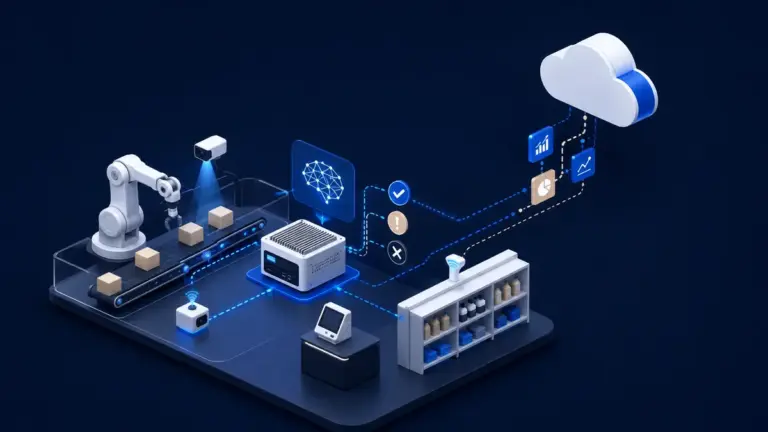
Edge AI: differences from the cloud, applications, hybrid architecture and KPI to measure latency, quality, continuity and cost.

How the company RAG works, when you prefer it to search and fine-tuning and which KPI use to evaluate its sources, answers and costs.
Clear answers on the scope, responsibility and working methods.
No. Marketing is a component. Digital Strategy Consulting also includes customer journal, data, technology, processes, organization and governance of investments.
Yes. The strategy must determine whether and when technological intervention is really necessary, avoiding starting from the solution.
Yes, with the level of detail available: priorities, dependencies, owners, rough estimates and measurement criteria.
I can participate in periodic checkpoints and steering. Continuous operational management remains with the internal team or the suppliers in charge.
Tell me your objective, project stage and the problem you need to solve.