


Omnichannel clienteling gives store staff a useful view of the relationship with the customer: online and store purchases, stated preferences, interactions and availability of products. The goal is not to send more messages, but to make the personal contact relevant and measurable.
This article focuses on activating individual communications from the store based on unified data and appropriate consent. This differs from mass CRM campaigns.
From the customer card to the action
A customer view has value only if it helps the associate take action: notify a customer when a desired variant arrives, prepare a relevant selection or contact after a relevant purchase. Showing too much data without prioritization increases lookup time and reduces the adoption.
The Right Commercial KPIs
Revenue attributed to outreach is not enough, because some customers would have purchased anyway. Compare contact conversion rate, contact-driven revenue, AOV, repeat purchase rate and retention with similar customers who were not contacted. When possible, the decisive metric is theincremental margin per hour of clienteling.
| Size | KPI | Risk to be avoided |
|---|---|---|
| Adoption | Active users and contacts per employee | Confuse quantity and quality |
| Effectiveness | Conversion rate and incremental revenue | Attributing spontaneous purchases |
| Retention | Repeat purchase and retention | Measure only the immediate sale |
| Efficiency | Incremental margin per staff hour | Ignore the cost of staff |
| Quality | Opt-outs and complaints | Overload the customer |
The impact on costs
Clienteling is not primarily a cost-cutting strategy. It can improve business efficiency by focusing time and incentives on customers with a real opportunity, reducing generic contacts and indiscriminate promotions. It can also decrease the reacquisition cost if it increases the purchase frequency of existing customers.
Platform, integration, training and staff-time costs remain, so the economic result must be expressed as incremental margin less labor and technology costs. A high message-open rate does not show profitability.
Attribution and control
An overly long attribution window assigns customers to purchases not caused by contact. A window that is too short misses real effects in slow decision categories. The practical solution is to define a window consistent with the purchase cycle and maintain a control group. Discounts and returns must be deducted from the attributed value.
When Strategy Creates Value
Clienteling works when staff use essential information to provide a useful service, the customer recognizes the value of the contact and retention gains exceed the operating cost. If it becomes an uncoordinated promotional messaging channel, it produces commercial pressure, opt-outs and inflated attribution.
Related advisory:For the operating model, business requirements and KPI framework behind these capabilities, see myomnichannel and Order Management consultingapproach.
Need to unblock an eCommerce or marketing project?
Tell me what you want to achieve and where the project is getting stuck.
Related articles
OMS vs ERP vs WMS: What Each System Owns and What an eCommerce Business Actually Needs
A practical guide to separating enterprise, warehouse and order-management responsibilities in omnichannel architecture.
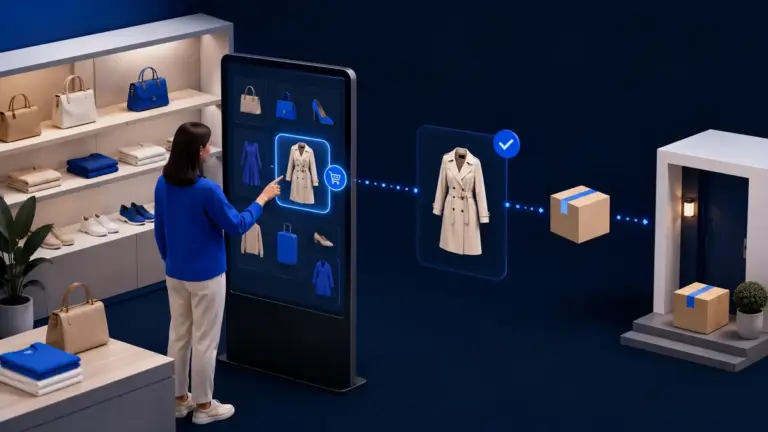
Endless Aisle: Recover In-Store Sales Beyond Shelf Availability
Endless Aisle: how to recover lost sales for unavailable and measure conversion, adoption, margin and savings on stock.
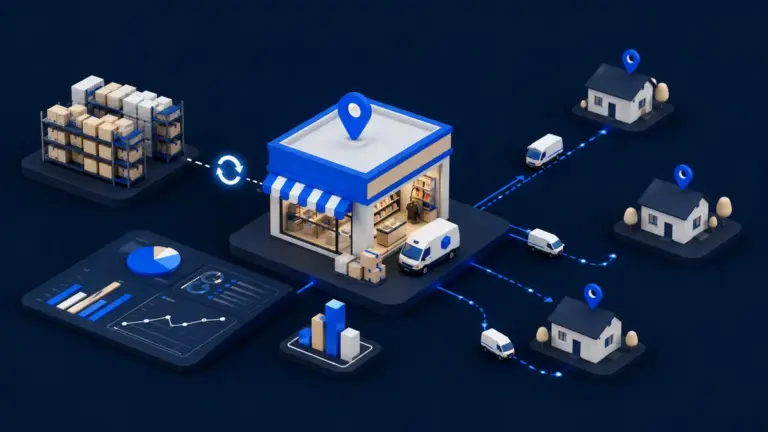
Ship-from-Store: Turn Retail Locations into Efficient Fulfillment Nodes
How to design the Ship-from-Store with orchestration rules, KPI logistics and complete cost calculation per order.